
Guest Insight • Behaviour Support & Therapeutic Practice
PBS vs PBM: What’s the Difference?
What’s the difference between Positive Behaviour Support and Positive Behaviour Management? Owain Groves-Lock of Draig explains why prevention and safe responses both matter in children’s homes.
By Owain Groves-Lock · Founder & Director, Draig Behaviour Consultancy • Draig Behaviour Consultancy • 16 November 2026
Who produced this article: Owain Groves-Lock, Founder & Director, Draig Behaviour Consultancy. This is a named contributor's article, published by CHH.
Sources and review: References to 1 source appear at the end of the article. A publication date does not imply independent clinical, legal or practitioner review.
Read who is behind CHH and how the Hub uses and explains sources.
A team can have excellent behaviour management training and still struggle to create a calmer, more supportive home. Why? Because knowing how to respond to an incident is different from understanding how to reduce the likelihood of it happening.
Owain Groves-Lock, founder of Draig Behaviour Consultancy, explains a distinction that is often misunderstood in care settings.
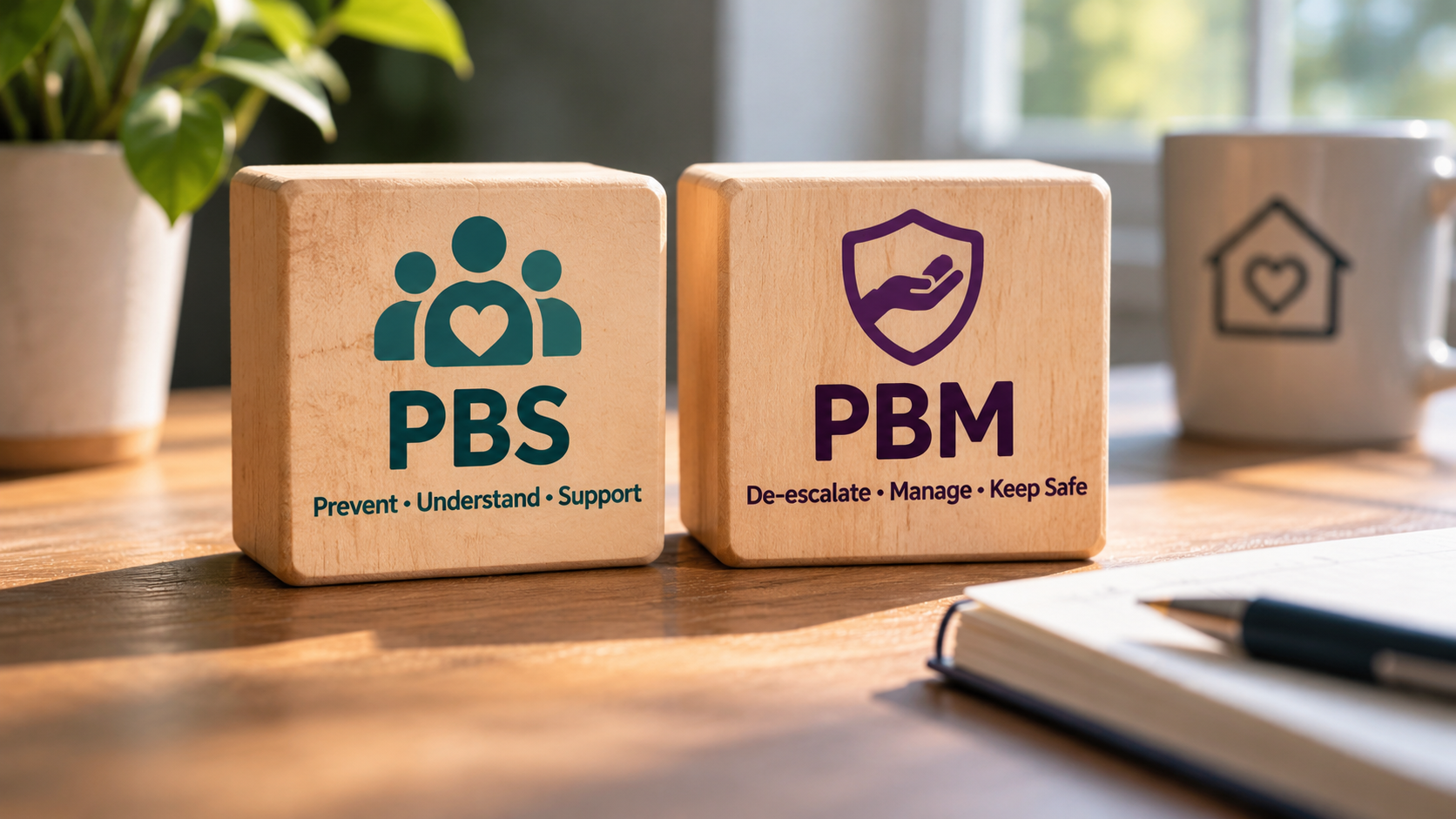
PBS helps us understand and prevent escalation. PBM helps us respond safely if escalation happens.
At a glance
Two approaches. Different roles. One shared aim.
Prevent and understand
Focuses on quality of life, reducing triggers, understanding needs and building skills before situations escalate.
Key question: What can we change to help this person thrive?
Respond and protect
Focuses on safe de-escalation, planned responses and the least restrictive lawful actions when risks arise.
Key question: How do we respond safely right now?
The strongest practice combines proactive support with proportionate, well-planned responses.
PBS: focus on quality of life
Positive Behaviour Support (PBS) starts with the person, not the incident. It involves understanding what a person's behaviour may be communicating and improving the environment, relationships, routines and opportunities around them.
That includes identifying triggers, meeting unmet needs and teaching skills that help someone communicate and get their needs met in more effective ways.
The goal isn't simply fewer incidents. It's a better quality of life. Fewer behaviours of concern may follow as part of that improvement.
PBM: what happens when a situation escalates?
In Owain's explanation, Positive Behaviour Management (PBM) refers to de-escalation and physical intervention training that helps staff respond to behaviours of concern when they are occurring.
It is about planning, recognising risk, keeping people safe and choosing the least restrictive lawful response. Different training providers may use different terminology, so it is worth checking what their programmes actually cover.
A practical example from a children's home
Imagine a young person regularly becomes distressed during changes to their evening routine.
The PBS response: Work with the young person to understand what makes transitions difficult. Consider predictability, communication, sensory needs, relationships and choices. Adjust the routine and give the team a consistent proactive plan.
The PBM response: If distress escalates despite those efforts, staff follow the individual plan, use appropriate de-escalation and manage immediate risks safely and proportionately.
The important point: The safe response matters, but preventing avoidable distress in the first place matters just as much.
Why using both matters
No home can prevent every difficult situation. Unexpected events and circumstances beyond staff control will still arise.
But a team that only responds once something goes wrong misses the opportunity to improve daily life. Equally, a team that plans proactively still needs clear arrangements for responding to immediate risks.
The question isn't PBS or PBM. It's whether the team can prevent avoidable escalation and respond safely when prevention isn't enough.
From training certificates to real practice
Draig Behaviour Consultancy focuses on the implementation gap — the difference between attending training and consistently applying it in everyday care.
For registered managers and providers, three questions are worth discussing:
1. Can staff explain what a behaviour might be communicating, rather than simply how they would manage it?
2. Are support plans visible in daily routines, supervision and staff decisions — not just in a folder?
3. Are incidents reviewed to improve the child's experience, not simply to record what happened?
About Owain and Draig Behaviour Consultancy
This guest insight is adapted from commentary by Owain Groves-Lock, founder and director of Draig Behaviour Consultancy. Draig supports organisations with Positive Behaviour Support, behavioural assessment, staff coaching and embedding therapeutic principles into everyday care.
Explore Draig Behaviour Consultancy's profile on Children's Home Hub.
*Editorial note: PBM terminology differs between providers. Any restrictive intervention must comply with applicable law, safeguarding requirements and individual plans.*